
Dear Reader ...
Dear Reader … is the script for a curator’s talk drawn from the pages of the journal NOVEL, edited by Alun Rowlands and Matthew Williams.
Written as an ongoing epistolarium, it assembles a collection of letters from literary sources such as Dickenson, Salinger and Barthelme alongside artists writings from Chaimowicz,to Strau. Extracts from Meunier’s ‘Act of Correspondence’, published in the second issue of NOVEL, punctuate the text asking how forms of correspondence figure ideas of reading, intimacy, and friendship.

Reading at ‘On Reading’, NOVEL Upstairs, Bergen Kunsthall, 2016
Dear Reader … unfolds as a correspondence—a polyphonic archive of letters, reflections, echoes and editorial fictions that blur the distance between sender and recipient, authorship and address. Its allographic form positions the text as a script waiting to be performed —each reading is another act of inscription, an instance of transmission. Each act of reading becomes illicit, an intrusion that turns the reader into a character, the next carrier of the letter’s burden. The text is an open score, composed to evolve through each iteration of reading and rewriting.
Constructed through acts of citation and re-voicing, the work draws on the confessional intimacy of J.D. Salinger, the fragmentation of Donald Barthelme, the diaristic sensuality of Marc Camille Chaimowicz, and the self-effacing discursiveness of Josef Strau. What emerges is not a linear narrative but a correspondence-as-form —a collage of missives that test the possibility of communication itself. The text treats the letter as both object and performance, staging the delay, distance, and imaginative projection that underlie all attempts to “reach the other.” These forms traverse the boundaries of the private, testing the politics of disclosure and the poetics of address. Neither expects reply—each suspends reciprocity in favour of performative presence.
Is the letter simply a remnant or trace of the absence that defines distance—temporal, spatial, emotional—or does ‘the letter’ itself enact relation, presence, and self-making? Dear Reader …, treats correspondence as a performative process of connection, an art of making rather than mourning intimacy. Letters, here, are not just records of friendship but the very means of producing it. We dwell on those letters never meant to be read by others—the ones that survive as traces of damaged, incomplete, or intentionally destroyed lives. What do we do with correspondences where only one voice remains, where reply has been lost to fire, time, or willful erasure? The archive of letters becomes a site of haunting —partial, ethically fraught and uncertain,
Dear Reader … as an ongoing ‘epistolarium’ becomes a speculative conversation about art, writing, and friendship—an exercise in correspondence that continually questions who we write for and who is writing back.


DEAR FRIEND – Are these more orderly ? I
thank you for the truth.
I had no monarch in my life, and cannot rule
myself; and when I try to organize, my little force
explodes and leaves me bare and charred.
I think you called me ‘wayward.’ Will you help
me improve ?
2.11.72
Prologue
The story that follows is not mine. I do not know who wrote it.
It came into my hands as follows. My reputation as a writer was established almost wholly as an author of fiction, despite some editorial work, when I launched on a series of three interrelated novels with a marked sexual bias. Shortly after the first in this series was published, I received two anonymous letters, one one week, one the next. Both were signed ‘God’, both were postmarked Reading.
Six months later, a bulky envelope arrived, it contained the manuscript that follows. There was no covering letter. The postmark on the envelope was, again, Reading. Whether the author was or was not ‘God’, I have no idea. The letters were vulgar and illiterate, but the illiteracy at least may have been assumed. The story that follows will be judged unpleasant by many, illiterate it certainly is not.
Although I am naturally interested by the mystery of origins (and teased by a suspicion that it may be intended as a parody of my work) I find the story interesting in its own right. There are echoes of _______, and like ________ the whole seems something between wavelength and frequency. My duties as editor have been light. I have divided some very long paragraphs, I have corrected a few spelling mistakes and I given the piece a provisional title.
My motives in getting the story published here is to contact the author. If she still keeps a watchful eye on my writing she will see that she has achieved print.
***
April 7, 1975
Dear ________,
My apologies, but for reasons that seem to me, at least, rather passably sane and fair, I’ve found it best, by far, not to read scripts or books that come in the mail. Years and years ago, I did have a short go at responding to gestures of the kind, but it led to complications that I couldn’t manage.
JDS
***
DEAR ______________,
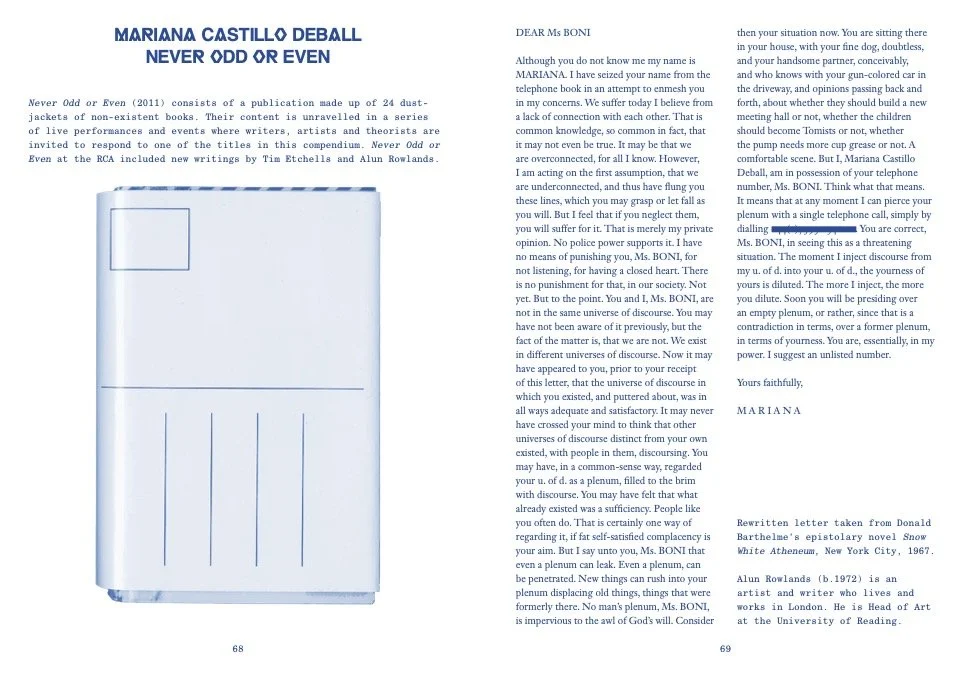
Although you do not know me my name is ______________. I have seized your name from the telephone book in an attempt to enmesh you in my concerns. We suffer today I believe from a lack of connection with each other. That is common knowledge, so common in fact, that it may not even be true. It may be that we are overconnected, for all I know. However I am acting on the first assumption, that we are underconnected, and thus have flung you these lines, which you may grasp or let fall as you will. But I feel that if you neglect them, you will suffer for it. That is merely my private opinion. No police power supports it. I have no means of punishing you, ______________, for not listening, for having a closed heart. There is no punishment for that, in our society. Not yet. But to the point. You and I,______________, are not in the same universe of discourse. You may have not been aware of it previously, but the fact of the matter is, that we are not. We exist in different universes of discourse. Now it may have appeared to you, prior to your receipt of this letter, that the universe of discourse in which you existed, and puttered about, was in all ways adequate and satisfactory. It may never have crossed your mind to think that other universes of discourse distinct from your own existed, with people in them, discoursing. You may have, in a common-sense way, regarded your u. of d. as a plenum, filled to the brim with discourse. You may have felt that what already existed was a sufficiency. People like you often do. That is certainly one way of regarding it, if fat self-satisfied complacency is your aim. But I say unto you, ______________ that even a plenum can leak. Even a plenum, can be penetrated. New things can rush into your plenum displacing old things, things that were formerly there. No man's plenum, ______________, is impervious to the awl of God's will. Consider then your situation now. You are sitting there in your house, with your fine dog, doubtless, and your handsome partner, conceivably, and who knows with your gun-colored car in the driveway, and opinions passing back and forth, about whether they should build a new meeting hall or not, whether the children should become Tomists or not, whether the pump needs more cup grease or not. A comfortable scene. But I, ______________, am in possession of your telephone number, ______________. Think what that means. It means that at any moment I can pierce your plenum with a single telephone call, simply by dialling [insert phone number]. You are correct, ______________, in seeing this as a threatening situation. The moment I inject discourse from my u. of d. into your u. of d., the yourness of yours is diluted. The more I inject, the more you dilute. Soon you will be presiding over an empty plenum, or rather, since that is a contradiction in terms, over a former plenum, in terms of yourness. You are, essentially, in my power. I suggest an unlisted number.
Yours faithfully,
______________
***
Dear NOVEL,
The fear of failing to reach the other, the failure of writing as well as the hope that the reading implies an understanding, that the meaning is conveyed to the other are characteristic for the process of writing letters. The choice of this communication media evokes memories of the past, when humans had to rely on it if they wanted to get in touch with a remote person. However, unlike one might assume, the letter does not constitute a particular special case of communication. With regard to the constellation of those involved in the communication process, a letter can be seen as an example of communication itself, if it is assumed that one structural characteristic of any message is the need to cover a distance. What is evident here is the way from one to the other as well as the delayed arrival, which, in terms of an awareness of distances and of the relationship from the time of writing to the spatial absence of the addressee, is intrinsic to the moment of writing.For an exchange of letters, the possibility of a response is strictly indispensable. A letter originates, because there is someone who is not at the same place as oneself, but who can be thought of and who is addressed by trying to write to her.
However, this writing is not like spoken language that has been put into written language; the written form emphasises the conveyance of the message and the situation of thought changes, when the text itself comes to the fore. The dialogue is inevitably limited to one person, you and I are embodied by the same person, insofar as the answer has to be imagined and the addressee becomes fictional. This leads to a soliloquy that is always initiated by the other.
***
Dear J,
As itinerant workers we go, where the work is... and yet, at some time has not each of us sat in a bar or cafe in a distant land, merely then to ask of ourselves; why travel when I might just as well be bored at home? Rare therefore is the city in which we can both work and dream... Living almost the life of a monk – albeit of a gracious order – I have developed the semblance of a routine... so although I often lose myself walking about the city – the better to enjoy and discover it – I have nevertheless established my own landmarks...
... These brief sorties during which I enter an imaginary dialogue with the city’s citizens, are like late morning shopping, a welcome interruption form the routine demands and isolation of my studio...
Dear J, do not imagine that I am suffering from a surfeit of history... Just as intuition precedes reason so I have discovered much here by happy accident and only later has detail come to my attention. But here some awareness of history is inescapable...
When I sit in Cafe Sperl, for example, my thoughts tend to oscillate between their own subjectivity and a memory seemingly rooted in the surroundings. As though a gentle but insistent aura pervades this now dilapidated place, prompting me to that it was once the regular meeting place of enigmatic thinkers...
Indeed throughout this city, cafes were once the fertile meeting ground between the public and the private.Those citizens subjected to grossly overcrowded housing were forced by circumstances to take refuge in such places- here to live out much of their lives - to receive their mail, to eat, to even shave, to court and to marry... And from the pretensions of insufferably claustrophobic middle class homes it was also the cafes that a precocious young intelligentsia escaped, there to establish their particular groups and forums...
If then the cafes once appeared to symbolise a relaxed and carefree existence of easy gossip, slow waltzes and cream pastries – the very image an increasingly anxious city was eager to project – these enchanting institutions were also the product of a grim reality...
MCC
***
Dear NOVEL,
The moment we start to write a letter, we are exposed to seclusion. With every written word, the writer becomes more and more aware of the separation from the other, that someone is missing. The distance to the addressee becomes increasingly insurmountable if one tries to address the recipient by means of a letter. It is thus the act of writing itself that is supposed to create closeness and demonstrate attachment. What is significant is the moment of addressing the other, which enables the writer to performatively achieve what she is describing: she simulates the situation of addressing someone, while at the same time living through it, regardless, whether and when the letter is read. However, the communicative exchange is already achieved by the mere fact that one can write to a potential reader. The temporal delay, which is intrinsic to the sending of a letter, cannot be ignored, but be utilised in a productive manner. The loneliness, the distance, the uncertainty if the letter will get to the addressee — this preventionof the direct presence of the addressee make it necessary to have trust in the act of writing a letter. The process between thought, word and writing, between you and I, of an inside and an outside, already creates closeness... This imaginativeness generates a fictional presence in the writing.
The writer encounters a multiple materiality: There is the object, which, in its necessity to cover a distance, is disruptive and leads to the stagnation of dialogue. Furthermore there is the non-congruity between written words and what is meant or thought, so that it often seems necessary to clarify any misconception by writing a further letter.
The construction of identities in the text of a letter is complex and raises the question as to who are we thinking of when writing a letter and are we really writing to this person, or do we in fact also have to make up the addressee. Her absence changes the form of address. We have to image the addressee. We also picture her reaction. How absent can we be?
The immediacy of dialogue in a letter is fictional, but used by the writer to overcome the gap between space and time. It is an attempt to envision the other, to make her visible. And vice versa, the word itself finds its addressee and in doing so, depicts her. The search for appropriate wording, for a tangible other, leads, from behind, to the formation of the imaginative addressee. It can become an authoritative trait of the writer, to replace the absent person by her own image. And the more this approach is pursued and the more real the image becomes, the further away the real person seems to move.
***
The New Year lamp musli shop lamp letter
The New Year’s resolution is now to communicate more positive things, or at least to see them, when there are some things positive and to look more to the outside world to find them... let me stop writing here, I get tired, I am actually very glad I have written or done something here again, I was not that busy for many days. After writing just one letter the day seems already over again shortly after three now, my energy spent... but maybe I’ll have another bowl of musli instead, the second or supper musli...
Some months ago I promised myself, to write a longer solid narrative text about maybe something which begins for the first time and I thought that there are many first times. Before too late, sitting down, I decided I wanted what is easiest. But there is an easy answer, but that is what it is all about here, the easiest.
JS
***
POSTSCRIPT:
The idea of a reader, who looks over the shoulder of the writer thus assuming a position of power, in which she virtually starts to write herself, provides a perspective of the writing process, of the ambivalent situation in which a thought shall be transformed into a communicable form, in order to become public. If it is the case that I construct the image of a reader in the course of writing, the addressee, simply by virtue of having been addressed, derives in return the right to announce a judgment in the future. The reader is not the second but just as much the first. Both positions — the provisional judgment of the reader and her image in the imagination of the writer—repeatedly become a mutual occasion to reformulate what already exists. Even the prejudgment is a text, and an openness is certain inscribed in it, to the extent that it is acknowledged provisionally. The structure of a letter — that the necessary construction of the other is evidently fictional — becomes essential to any form of communication, if the other isunderstood in relative absence to oneself. The question remains if the fictions are not even an essential prerequisite for any kind of rapprochement, if a person is not assimilated, but if its strangeness and uniqueness are met with a story that does not define but respond. To correspond could thus mean to accept the experience of a distance, without trying to shorten it, without applying the fiction to a tangible other, but to accept the existence of non-congruity. Getting to someone implies covering a distance. To become aware of and to respect this distance (by means of fictionalisation) means to respect the other as a person—in order to do him justice and to concede him an undefined space. The question, as to whether the purpose of a letter can be ascertained at all, if its purpose can only be invented or remembered, could be accompanied by the proposition that there may not be a real addressee who could be reached, but maybe someone similar. And she remains indispensable if the will of expression is to be worthwhile.
***
Letter to ________________ (1970)
No apologies necessary –– Both of us have resorted to a bit of master baiting (sic) when our positions have worn thin –– Facts which are mutually agreed upon phenomena are hard enough to come by let alone truths, which are the relations between facts. Your questions have been most stimulating when most vexing and neither of us would boast I think of the competence of our answers –– Let us assume that I am an artist (a matter not beyond dispute) and not that I have a leftist philosophy but a temperance of dissatisfaction deriving from the history of protestant dissent in Europe (the same dissent which gave rise to capitalism) –– I am sceptical, distrusting, pessimistic by nature and by choice but I do feel sure that 400 years ago in various corners of Europe my ancestors lived the lives of mal treated draft animals –– The last 400 years has seen the rise into history of untold millions who without the courage of dissatisfaction would have remained in their brutish state –– Numerous revolutions have occurred in that time –– the most glorious and successful have been the ascendancy of capitalism –– the organisation of the mass modes of production and subsequently of distribution through capitalistic practice and ideology have been the most dynamic events in conscious human history –– Where then my dissatisfaction –– It is this condition that leads to the romance of objective evil in modern capitalist society and the resort to inappropriate objects such as art or drugs or mysticism –– That is to say even if the capitalist system were to achieve perfect justice it would forfeit its claim to the allegiance of mankind seeking to reproduce itself it would fossilize and finally extinguish humanaspiration –– It is no irony that once capitalism has finished its magnificent work its theory & practice must be extirpated if the human race is not to sunk back into barbarism –– Enough of potifex historicus –– What about my own view of myself as an artist in this society –– First everyone in a human culture is profound by implicated in it biologically –– in the style of maintaining and reproducing human life –– No one of us lives as a bird in the air or by dropping mana (sic) of the chosen people –– We are each of us implicated in the organisation of the modes of production –– It is infantile to pretend one is not doubly hebephrenic to aspire to be severed from culture.
***
Dear ____________,
Books are thick letters to friends. They are telecommunication in medium of print to underwrite friendship. Ever since Philosophy began as a literary genre, it has recruited adherents by writing in an infectious way about love and friendship. Not only is it about the love of wisdom: it is also an attempt to move others to this love... its capacity to make friends through its texts. It has been re-inscribed like a chain letter through the generations, and despite all the errors of reproduction, indeed perhaps because of such errors, it has recruited its copyists and interpreters into the ranks of brotherhood...
If we consider the epochal results of mail, it becomes evident that it has a particular relationship to the writing, sending and receipt of philosophical writing. Apparently, the writer of this type of love letter sends his work out into the world without knowing the recipient – or even if he knows him, he is conscious that the transmission transcends him and might provoke an unknown number of chances of friendship of the writer of books and letters with nameless, perhaps even yet unborn readers. Erotically seen, the hypothetical friendship of the writer of books and letters with the recipients of his messages represents a case of love at a distance – and this entirely in the sense of knowing that writing is the power to transmit love not only to our nearest and dearest, but also through the next person encountered, into the unknown, distant future life. Writing not only creates a telecommunicative bridge between known friends, who at the time of transmission live in a geographical proximity to one another; but it sets in motion an unpredictable process. It shoots an arrow in the air, with the objective of revealing an unknown friend and enticing him into the circle of friends. In fact the reader who sits down to a thick book can approach it as an invitation to a gathering, and should she be moved by the contents, she thereby enters the circle of the CALLED, making herself available to receive the message.
Letters that are not mailed cease to bemissives for possible friends; they turn into archived things. Thus this – that the important books of the past have more and more ceased to be letters to friends, and that they do not lie any longer on the tables and nightstands of their readers – this has deprived the movement of its previous power. Less and less often do archivists climb up to the ancient texts in order to reference earlier statements of modern commonplaces. Perhaps it occasionally happens that in such research in the dead cellars of culture the long- ignored texts begin to glimmer, as if a distant light flickers over them. Can the archives also come into the Clearing? Everything suggests that archivists have become the successors... For the few who still peer around in those archives, the realisation is dawning that our lives are the confused answer to questions which were asked in places we have forgotten.
***
ERRATA:
If the fate of particular books demonstrates anything, it is that books, texts, essays, open letters also, and sometimes much more easily, make enemies. And this is not necessarily a bad thing – why it may well be a good thing in fact; enmity rather than friendship, we dare to venture, ultimately ensures the health of all thinking and writing. We have said elsewhere (but where exactly in our robust body of collected writings?) that the history of art should or at least could one day be recounted from the perspective of its being a history, in the final analysis of friendship (if not love affairs); if that happy day will ever come to pass, however a riposte - yours dear reader – will inevitably invite itself in the shape of history of hostilities and of enmities... And so we long for the return or revival of truly vitriolic letter writing ...
And supposing we never meet again, this letter better be damn well written.
***
October 21, 1962
Dear ___________,
I must tell you first, off puttingly or not, that I am at best a one-shot letter writer, these days. Along with that, I really never have anything to say when I’m done writing fiction at the end of the day. One thought, and one only, hits me about your letter. Entirely “materialistic”, I’m afraid. You need a new typewriter ribbon. Get one or don’t get one, but unless you make and effort to deal with things as unabstractly as that, you’re stewing quite unnecessarily. You’ve decided that Things are what matter to people. Of course. Not only with “people” but with you, too. Everything in your letter is a thing, concrete or abstract. For me, before anything else, you’re young women who needs a new typewriter ribbon. See that fact, and don’t attach more significance to it than it deserves, and then get on with the rest of the day. Good wishes to you.
END
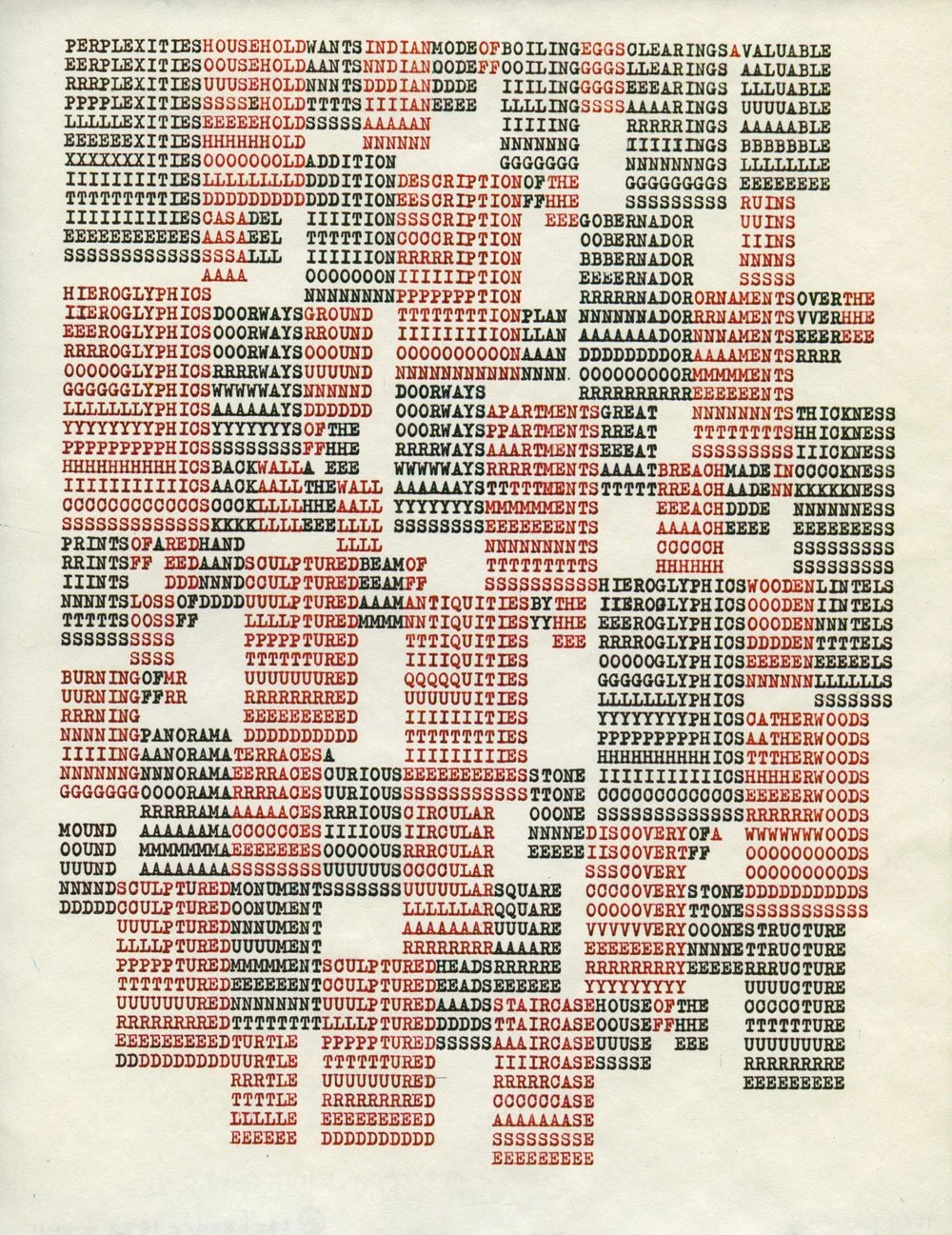
Carl Andre, Excerpt from Yucatan, 1972
Words to be Spoken Aloud, Tuner Contemporary, Margate, 8–10 March 2013
Words to be Spoken Aloud was a weekend festival of artworks by that featured written text that is performative through its structure or form. Performances, installations and works on paper used text as a structure and medium; vocalisation as a point of transformation and realisation.
Contributors: 666 6 (EP Park, Phil Root), Nicole Bachmann, Fiona Banner, Anna Barham, Josie Bassett, Ruth Beale, Aine Belton, Anthony Burrill, Ben Cain, Lucy Condon, Toby Huddlestone, Lucy Kelleher, Isabella Martin, Alun Rowlands, Sue Tompkins.
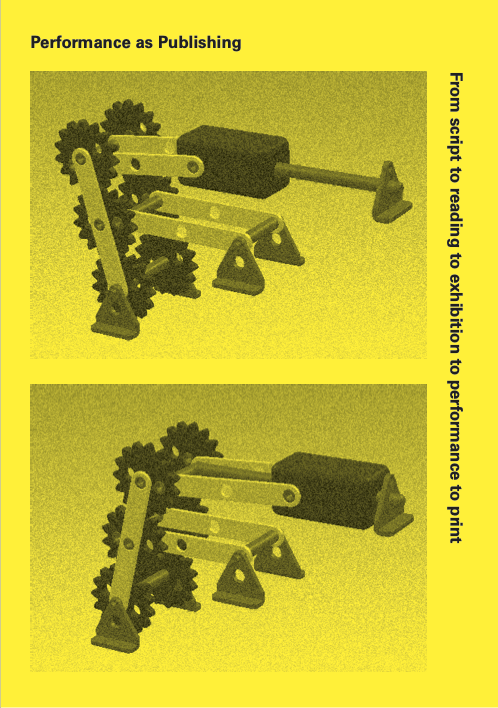
Publication: From script to reading to exhibition to performance to print
Rowing, London, curated and edited by Nicole Bachmann, Ruth Beale, (Performance as Publishing), Guillame Breton and Tyler Woolcott, (Rowing) October 2013
This publication formed one static point in the loosely circular movement of From script to reading to exhibition to performance to print. The contributions exemplify the way artists use text as both material and tool, validating all points as both process and endpoint, proposal and realisation.
Publication: Alun Rowlands, Michael Dean, Emma Kay, Fiona Banner, Jess Flood-Paddock, Daniel Gustav Cramer, Cara Tolmie, Marcelline Delbecq, Francesco Pedraglio, Katja Novitskova.
Exhibition and performance works: Am Nuden Da, Chosil Kil, Guy de Cointet, Jess Flood-Paddock, Neil Beloufa, Nicole Bachmann, Patrizio di Massimo, Ruth Beale, Alex Cecchetti, Beth Collar, Benjamin Valenza, Marcelline Delbecq, Ruth Beale, Mark Geffriaud, Sharon Morris, Rory Pilgrim
Designed by An Endless Supply
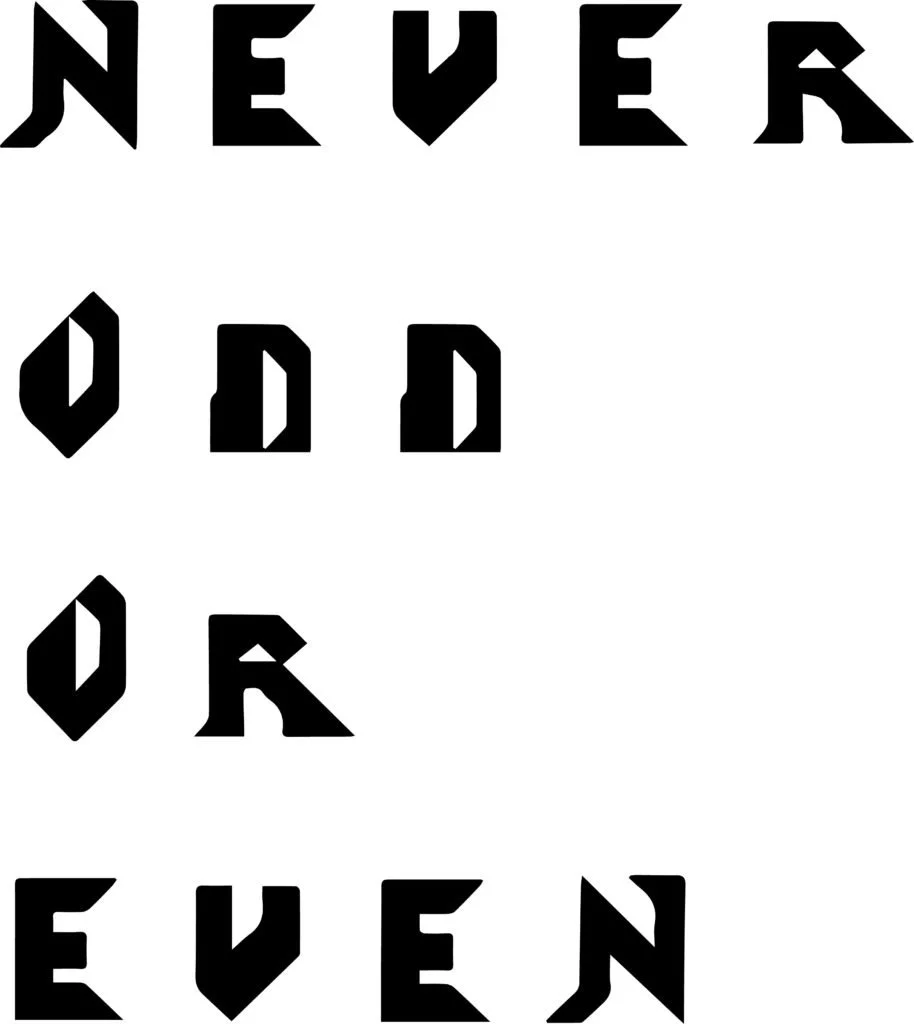
Never Odd or Even
31 March, 2011, Henry Moore Gallery
A book club initiated by Mariana Castillo Deball with new contributions by Tim Etchells and Alun Rowlands.
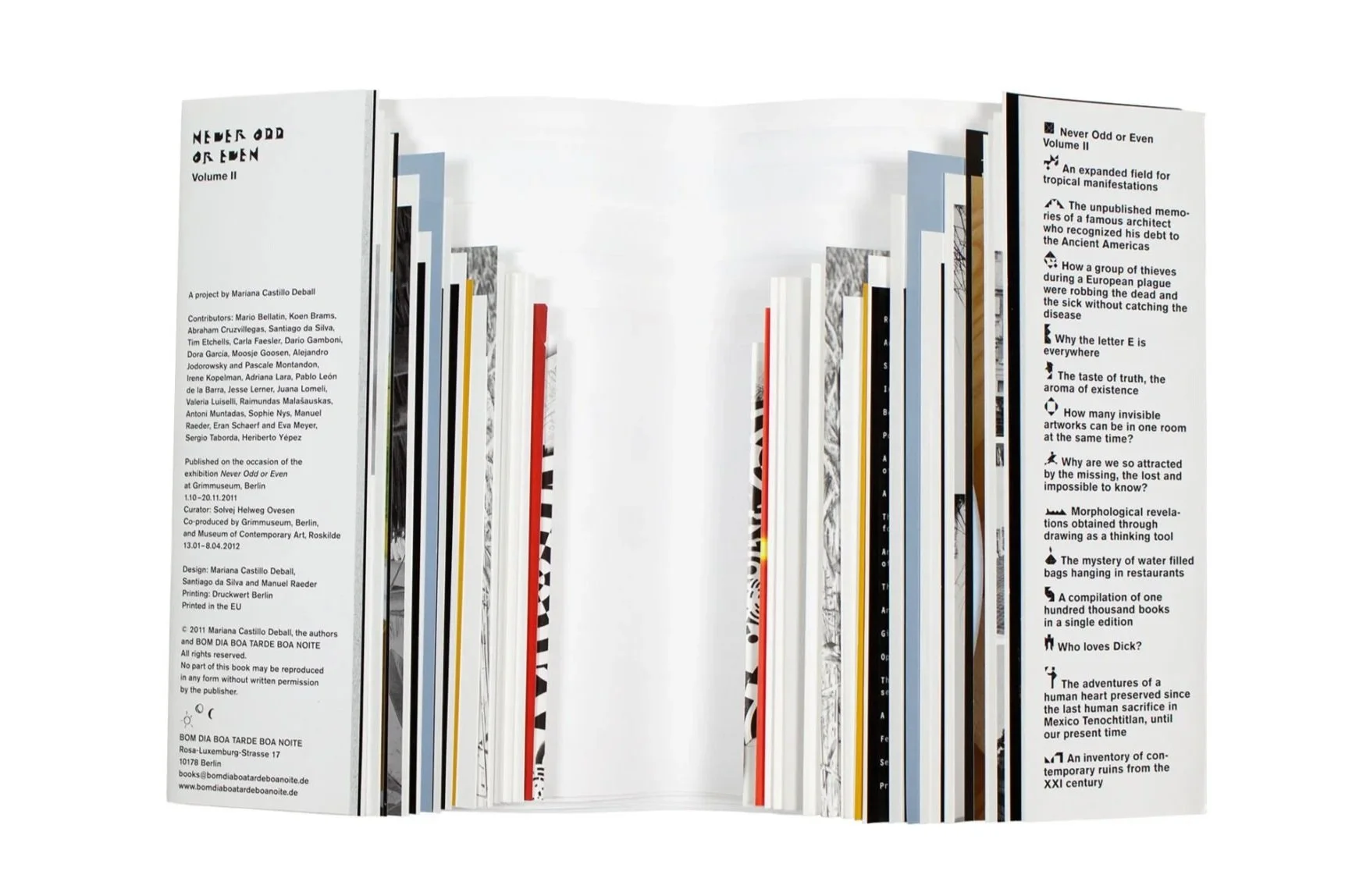
Never Odd or Even (2011) consists of a publication made up of 24 dust-jackets of non-existent books. Their content is unravelled in a series of live performances and events where writers, artists and theorists are invited to respond to one of the titles in this compendium. Never Odd or Even at the Royal College of Art includes new writings by Tim Etchells and Alun Rowlands.
As part of ‘Shadowboxing’, curated by Vanessa Boni et al, MA Curating Contemporary Art, Royal College of Art, 2011
Mariana Castillo Deball, Never Odd or Even, Volume I, Revolver, Frankfurt, 2005
An anthology of dust jackets of non-existing books. A compilation of 24 titles in one single publication. A literary journey throughout different topics and subject matters: archaeology, contemporary gardening, magic, history of technology, mysticism, tourist guides, autobiography, archival techniques, monuments in motion, and more!
In a second stage of this project, the content of the book titles is unraveled through a series of live performances from writers, artists, each invited to respond to one of the titles in the compendium. Speakers have the freedom to invent the possible content of the chosen title. Throughout this process, a collection of different ideas, performances, and texts are built up around the series.
The aim of Never Odd or Even is to develop a collaborative method by which distribution i not a final stage, but a central part of the process.
Distribution is understood as a way to occupy or invade different contexts. Each project allows multiple and diverse objects to work as performative devices. The importance lies in how these devices are disseminated, and how they can generate a territory. Never Odd or Even is a metaphor for understanding the way the small becomes huge, symbolizing both dissolution and community.
“A gesture that is repeated in different contexts” “An explosion of meaning that reaches several points; every particle ends up somewhere else coming back with a new shape”.
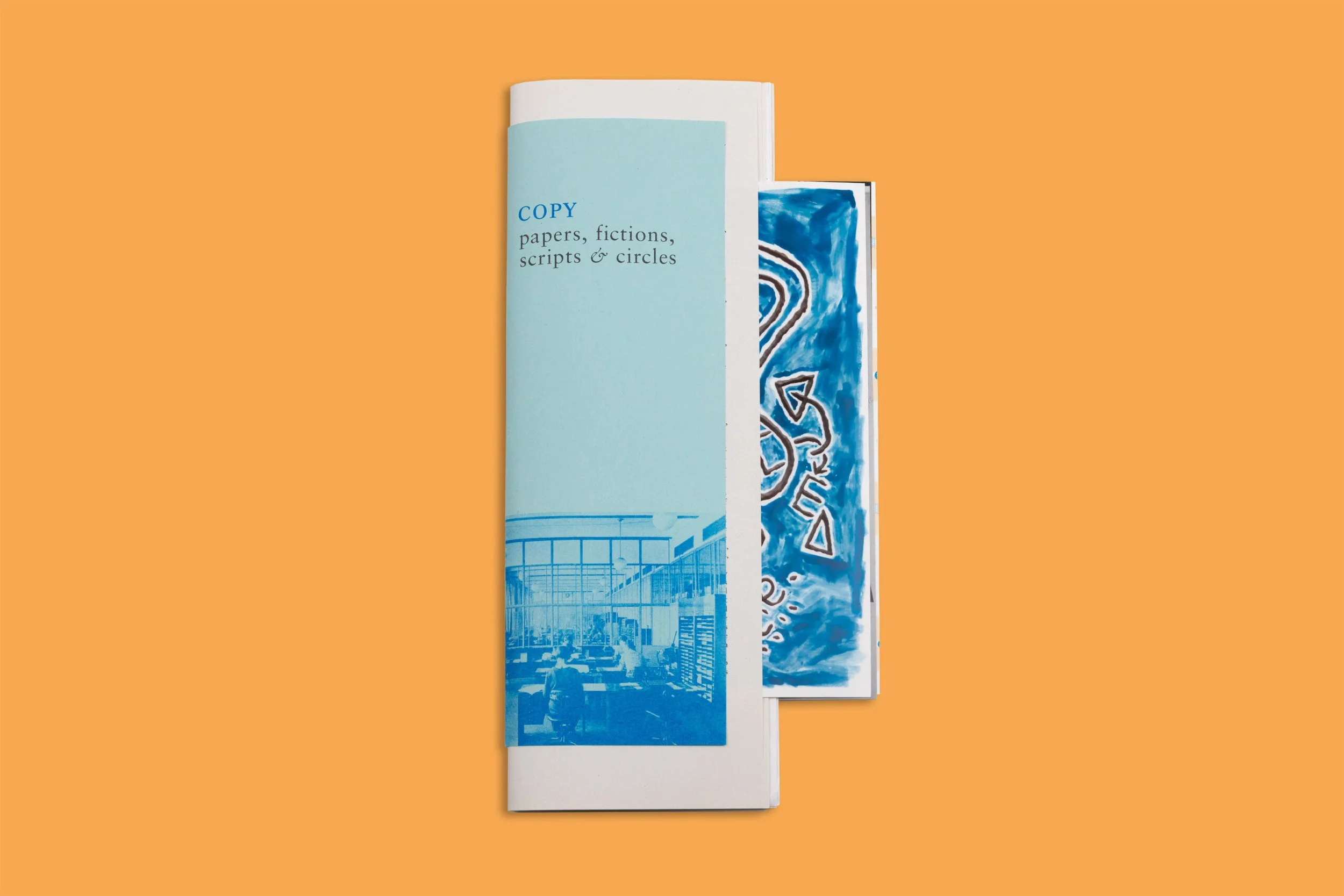
Papers, Fictions, Script & Circles
Site Gallery, Sheffield, 2012
Organised by COPY (Charlotte Morgan and Joanna Loveday).
A weekly series of discussions exploring forms, processes, structures and concerns within independent publishing, artist publishing and interdisciplinary visual and textual practices produced for the page.
Papers drew upon the history and significance of self-publishing, its implications today and the use of publication as medium or curated space.
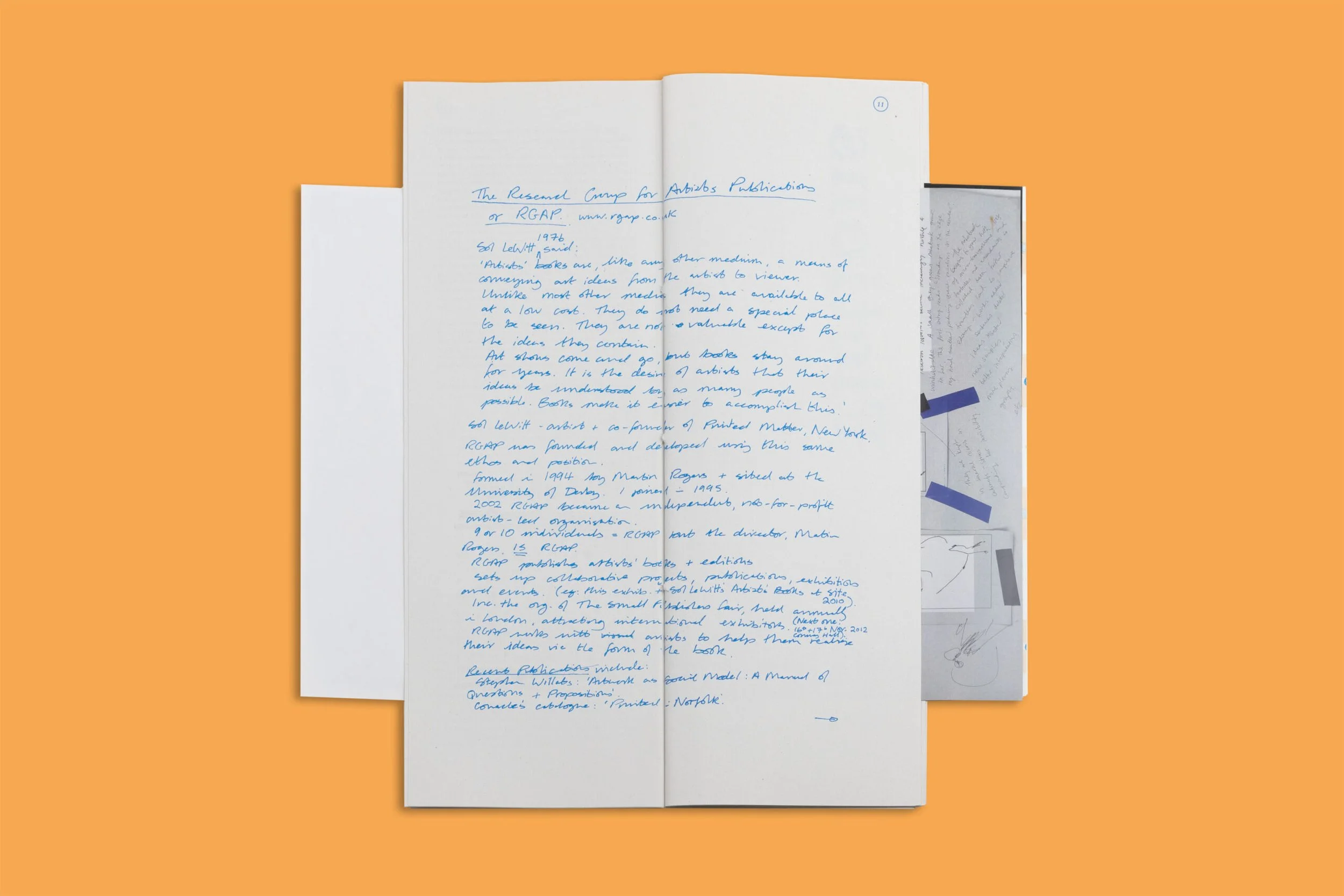
Coracle Press, Lynn Harris (AND publishing), David Osbaldeston, Research Group for Artists Publications.
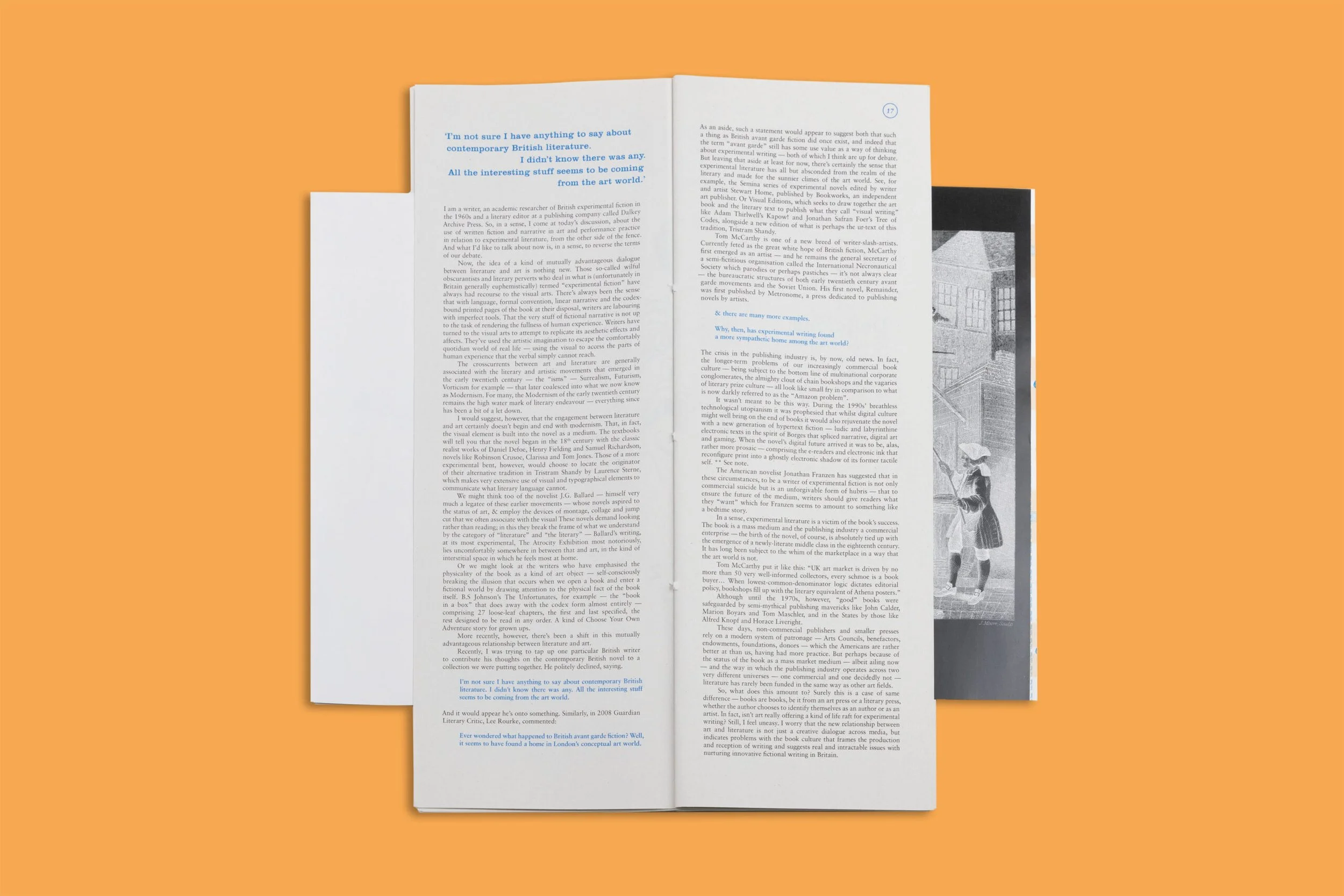
Fictions explored the use of written fiction and narrative in art and performance practices and their relation to experimental literature.
Jamie Crewe, Jennifer Hodgson, Tamarin Norwood, Alun Rowlands.
Scripts focused on texts, diagrams and scores which form a dialogue with, or constituent part of, live readings or performance.
David Berridge, Rachel Lois Clapham, Ami Clarke, Patrick Coyle.
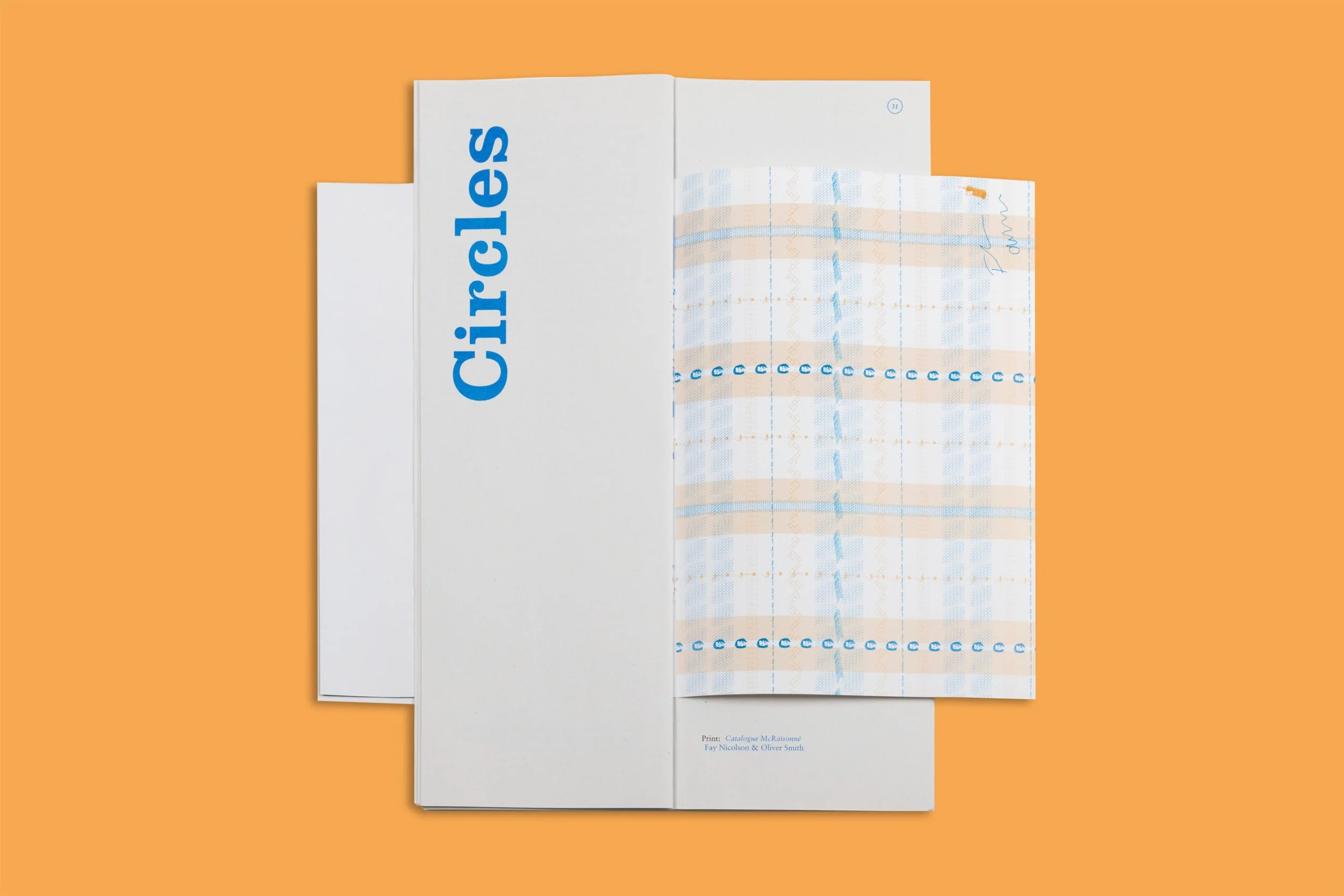
Circles discussed the significance of spaces for sharing, storing, reading and activating printed work and the shifting roles of libraries, fairs, project spaces and institutions in artist publishing activity and networks.
Emma Cocker, Kit Hammonds, Simon Lewandowski, Francis Mckee.
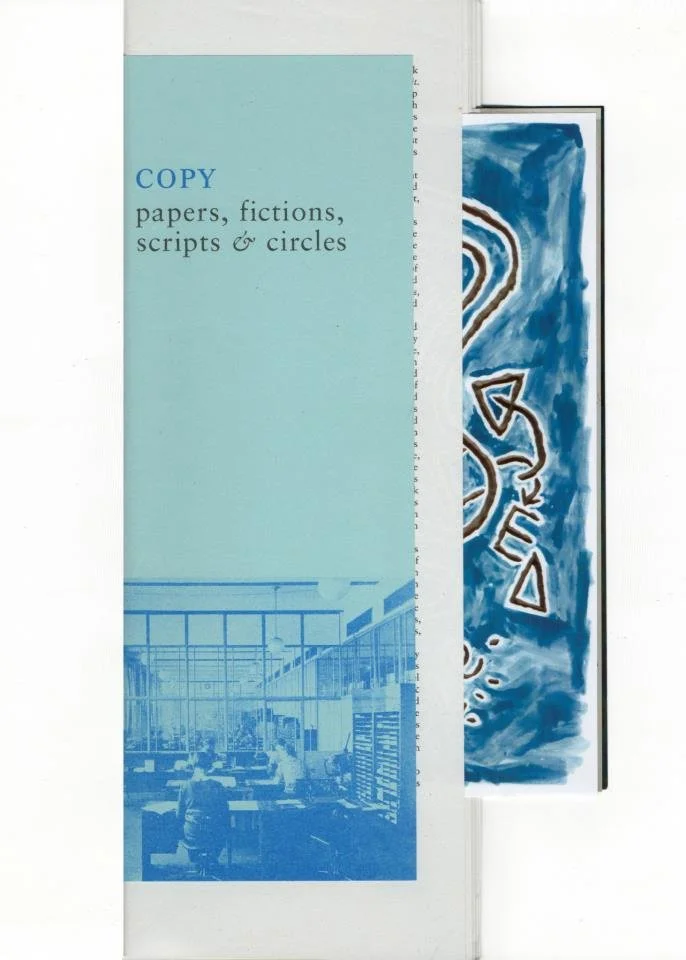
Papers, Fictions, Scripts & Circles
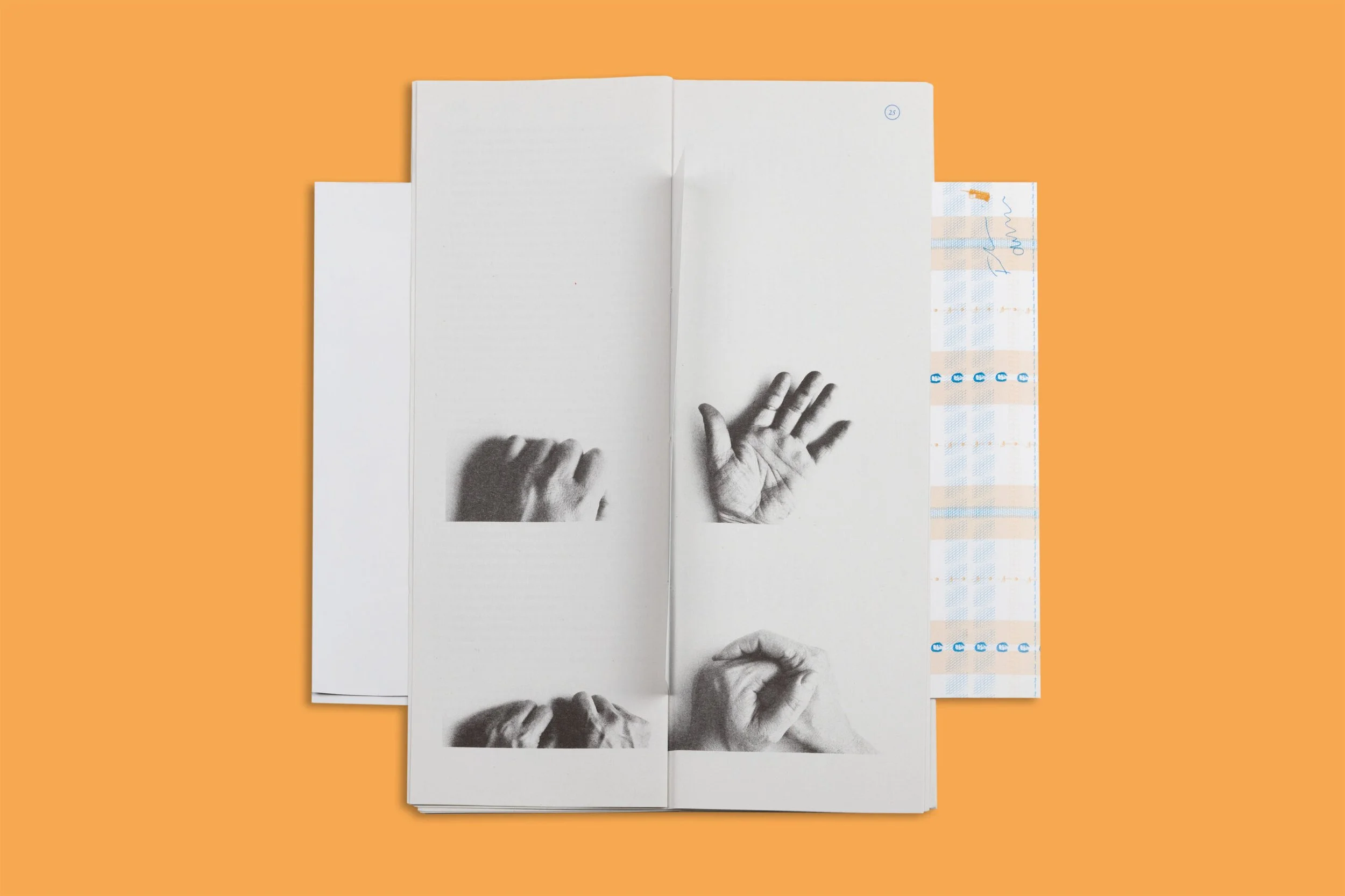
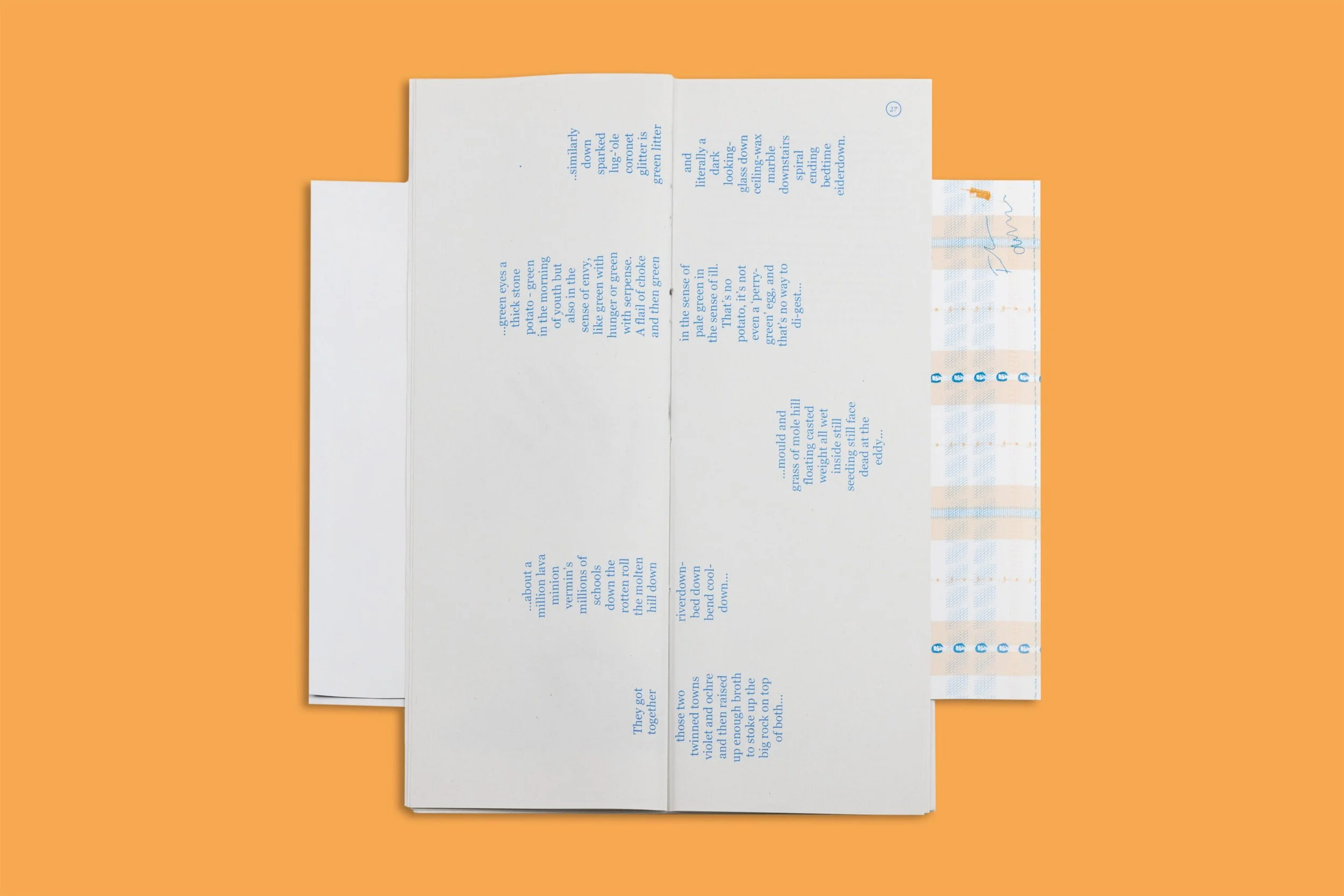
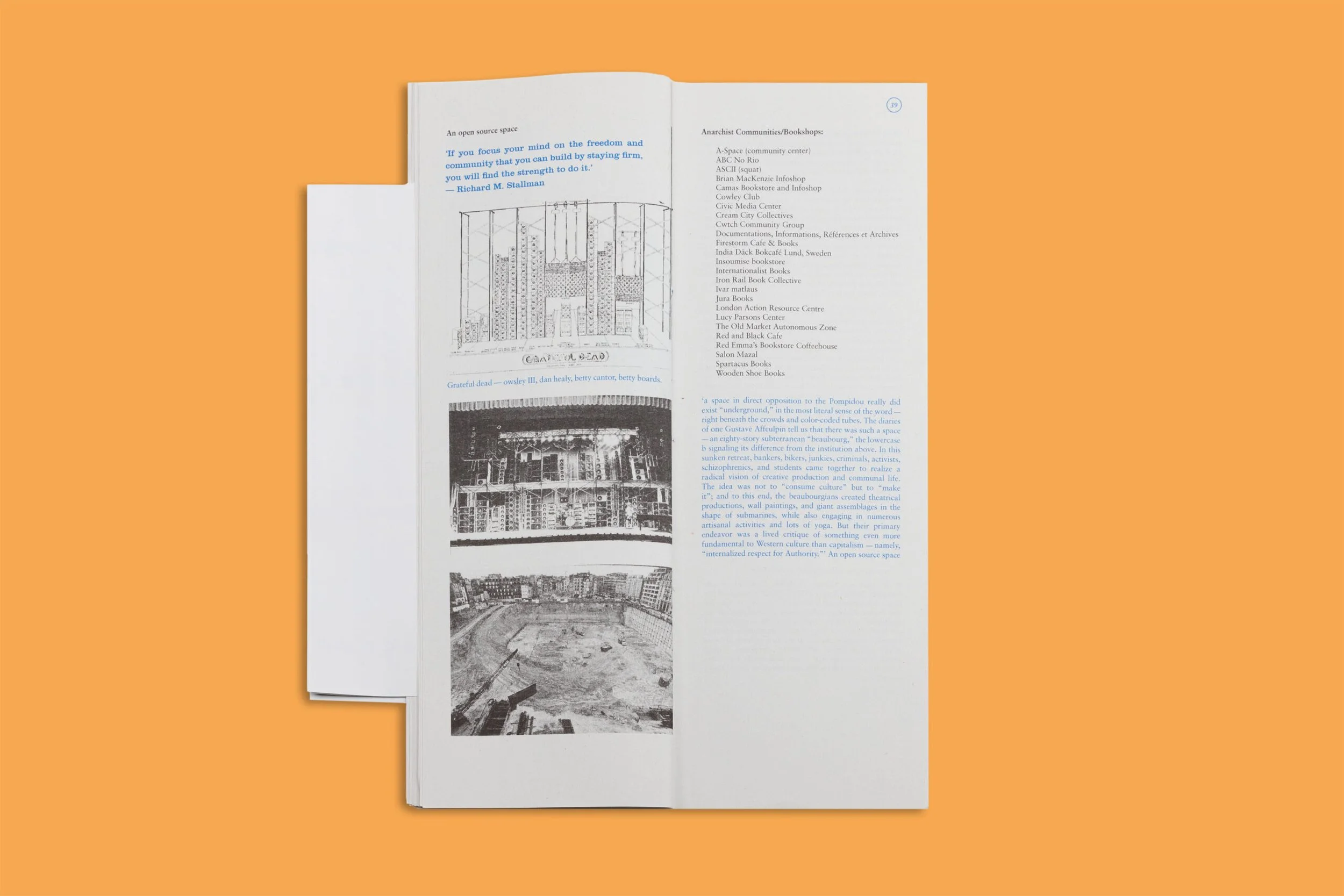
Hand bound publication featuring ‘notes’ contributed by the invited guest speakers from talks held during COPY’s residency at Site Gallery Sheffield, along with miniature reproductions of commissioned prints.
Contributing artists: David Berridge / Chloe Brown / Rachel Lois Clapham / Ami Clarke / Emma Cocker / Coracle Press / Patrick Coyle / Jamie Crewe / Daniel Fogarty / Kit Hammonds / Lynn Harris / Jennifer Hodgson / Simon Lewandowski / Louisa Martin / Francis McKee / Fay Nicolson and Oliver Smith / Tamarin Norwood / David Osbaldeston / Alun Rowlands / Nick Thurston
105 x 297mm
Risograph + digital inserts
3 hole pamphlet stitch
44 printed pages

Epistolary text taken from rewritten letters including a.o:
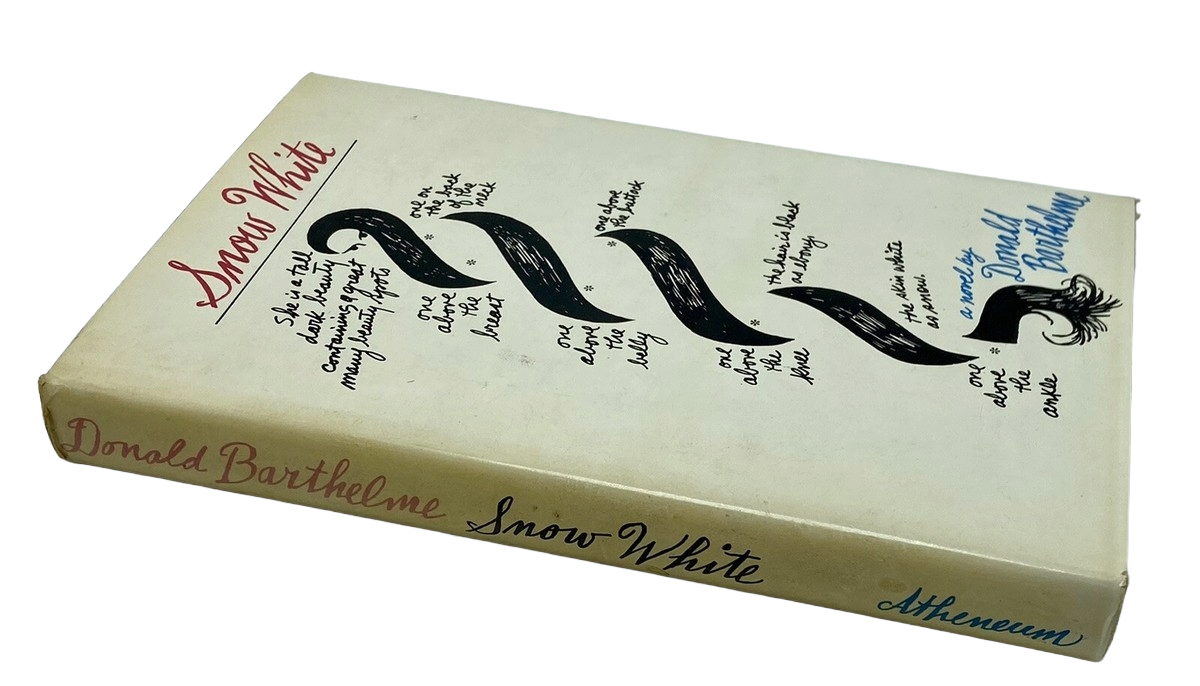
Donald Barthelme, Snow White Atheneum (New York City), 1967
Jason Hoppe. “Personality and Poetic Election in the Preceptual Relationship of Emily Dickinson and Thomas Wentworth Higginson, 1862-1886.” Texas Studies in Literature and Language 55, 3 (Fall 2013): 348-387, 360.
Karolin Meunier, The Act of Corresponding (Novel § 2, London), 2009
Josef Strau, A Dissidence Coincidence But W.H.C.T.J.S (Malmo Konsthall) 2008
Marc Camille Chaimowicz, Café du Rêve (Editions du Regard, Galerie de France, Paris, 1985) p.109
Peter Sloterdijk, Rules for the Human Zoo: a response to the Letter on Humanism, In: Nicht gerettet: Versuche nach Heidegger (Suhrkamp, 2001) pp 302 – 333
Letters of J D Salinger, Literary Trust, 1962 & 1975